CEE banks ready for next challenges after riding wave of demand to established status
Buoyed by strong interest in their attractive risk-reward profiles, central and eastern European banks have in recent years enhanced their profiles in international markets. On 13 April, Crédit Agricole CIB and Erste Group brought together issuers and investors for a CEE Bank Day in Paris to explore the stories behind their outperformance and consider what the future holds. Neil Day reports.
You can download a pdf version of this article here.
Vincent Hoarau, Global Head of FIG Syndicate, Crédit Agricole CIB: Jakub, the global credit spread complex has tightened significantly in the past year, including for CEE and Polish banks. We now have very deep geopolitical volatility, which is clearly giving rise to a great level of uncertainty. How have you managed the execution of your funding plan through these phases? And how do you assess the relative cost/benefit between your various funding instruments?
Jakub Niesłuchowski, Head of Finance Division, PKO Bank Polski: First of all, I would like to underline that Poland is predominantly a deposit-funded banking sector. From this perspective, the rationale for bank bond issuance out of Poland is predominantly MREL requirements. So when discussing our funding plan, it’s rather a regulatory-compliance plan, than a funding plan per se, because with LCRs above 200% on the sector-wide level, we’re already really well funded. Also, MREL is not a one-off exercise, but an ongoing one, so you can’t prefund in one shot and then forget about it, we need to factor it into our longer term strategy. What this ultimately translates into is predictability — for investors, for our clients and for the broader market.
After 2025, we started the year with a pretty significant buffer over minimum MREL requirements, of more than two percentage points, which gave us comfort that we were not under any pressure to issue quickly. This allows us to be selective — we issue when it makes economic sense, not because we have to. We could look at how to spread our issuance across the year, looking at, on the one hand, the euro market, with its scale, depth and breadth of investor base, and on the other hand, the Polish market, where the depth is rather limited but our name recognition helps. We are and will be present on both markets. It also reflects our role as a systemic bank — we need to be present where our investors are, while staying anchored in the domestic market.
Looking back at 2025, we had seven transactions out of our group, including three senior preferred and senior non-preferred transactions on the euro market, plus — adding to our range of instruments — one covered bond. We have the specialised banking model in Poland when it comes to covered bonds, meaning that only mortgage banks can issue them. Our mortgage bank, PKO Bank Hipoteczny, is quite active on the market, given that we have a very substantial Polish zloty mortgage market share of around 27%. Our regulator has also helped on this side by introducing a long term funding ratio, where the basic idea is to have, based on the regulatory stance, adequate long term funding in the form of own funds surplus, MREL instruments, but also covered bonds and partially deposits in relation to the mortgage portfolio on the consolidated level. This may trigger more covered bond issuance, but, again, our main focus is MREL.
Looking at things from the cost perspective, issuing in Polish zloty is advantageous, simply because Polish zloty is our base currency from a balance sheet perspective and so we eliminate the cost of swapping — when issuing in euros, we usually swap to Polish zloty. So we naturally prioritise efficiency from a balance sheet perspective.
We also are active in the Tier 2 space. The rationale is, on the one hand, addressing MREL requirements, and on the other hand, achieving a one-notch higher SNP rating thanks to issuing the more subordinated Tier 2 instrument, which overall means it makes sense economically. For now, this Tier 2 issuance has only been in Polish zloty, while on the euro market, it was senior preferred and SNP transactions.
We also track the capacity of the different markets when considering our issuance. The Polish market is not sufficient on its own, so we look at how much we have been issuing in the different markets, how much capacity there is, and which instruments we are looking to issue, and then decide on our issuance strategy.
Hoarau, Crédit Agricole CIB: An increasing number of banks from the region are becoming active in the euro market. Do you see any sort of risk of over-supply? What are you doing to diversify your investor base?
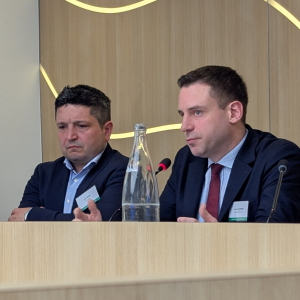
Niesłuchowski, PKO Bank Polski (pictured): As I mentioned, we are looking at both markets, euros and Polish zloty. In regard to today’s event, we are already a regular issuer on the euro market and we plan to remain so.

If we look at the scale of the issuance of out of CEE compared to western European issuance, it’s still not very significant. There has nevertheless been, predominantly due to MREL requirements, a rise in CEE issuance, also out of Poland. In this regard, when planning our issuance we try to align ourselves with our compatriots, because it is now a question of taking a more tactical approach, trying to avoid being on the same day or maybe in the same week as each other. At the same time, PKO BP is in an advantageous position, because we are the biggest bank in Poland, so, simply put, I’m less afraid of being crowded out by other names. Indeed, we know that our role can sometimes be to pave the way for other banks. So while we are trying to be more tactical, I don’t see an issue of overcrowding among CEE names.
How might we experience overcrowding? The way I look at it is that there could be a busy day with issuance from western European names, because they are the benchmark for us. We may still need to pay a premium over them, but we are determined to be as close as possible to them, taking into account our credit story, the strength of our institution, and all the arguments in our favour. At the same time, we know that if the market is busy, investors may sometimes look at the names that are no-brainers, while we are still increasing our name recognition. So that’s our main challenge, to put PKO Bank Polski on the map in line with western European names.
Hoarau, Crédit Agricole CIB: Moving to the buy-side, Jérémie, you buy senior pref, non-pref and Tier 2 from CEE names. How do you assess the appropriate spread premium for them and play the relative value versus other names, whether that be financials or corporates you are already potentially looking at?
Jérémie Boudinet, Head of Financial and Subordinated Debt, Crédit Mutuel Asset Management: It’s not rocket science; naturally, it’s a mix of economic analysis, financial analysis of the local banking sector, the bank itself, and several bond-specific factors.
Firstly, on the macroeconomic side, you start from the sovereign rating. That’s especially relevant for those countries closer to the high yield space, as this has direct consequences for the banks, which are usually rated up to the rating of the sovereign, unless they are highly diversified or particularly strong. Hungarian and Romanian banks fall into that category. The strength of the macroeconomic outlook is, of course, very important — for Poland, that’s a really great strength supporting continued investment — and if a country’s trajectory is downward, the trajectory of its local banks will also suffer.
On the issuer-specific side, we examine the shareholding structure of the bank. Is it partly owned by the state? What are the links? For some countries, this is especially important, for example, Hungary, where the top two banks have been really close to power and some influence from that is evident. Sometimes it can to an extent be seen negatively. So we take that into account. Also, is the bank listed? What is the level of financial transparency that you can get? Access to quarterly results, the quality of information, translation into English — these are the basic types of thing that we take a look at.
And then, very importantly, we have bond-specific aspects. The first thing to note is that, as fund managers, we have constraints, and one is the geographical landscape that we can invest in. For a lot of funds, we are bound by having to be invested into the EU, but especially into the OECD, which is a problem for a few countries. Croatia, for example, is part of the Eurozone, but it’s not yet part of the OECD, and as such, for most funds which can only invest in OECD countries, you cannot invest in Croatian names. That’s a very important consideration. Also, whether or not a national banking system is prone to anti-money laundering issues and similar.
The spread premium is also a function of to what extent the issuer has an established curve. Ultimately, how liquid are the bonds? PKO, for example, has a really good curve, and as such, it’s really easy to trade them, with liquidity having gotten much better. A lot of securities can be seen as expensive right now, but beyond that, what remains true is that bid-ask spreads are pretty wide for smaller issuers that are not yet very established on the scene in euros, and sometimes it’s really difficult to find paper or to sell paper, which can be a problem. For us, the liquidity of bonds is very, very important: their size, how they are traded, the extent to which they are followed on the sell side, the information and research we get — these are among the aspects we look at.
Hoarau, Crédit Agricole CIB: Following the tremendous spread compression we have seen over the past 12 months, at current spread levels, looking at the CEE region, do you feel you are adequately compensated for the various risks there may be regarding, for example, jurisdiction, liquidity, resolution frameworks, and potential issues around name recognition? And if you are sufficiently compensated, at what point do you think it could become insufficient in terms of relative value versus some core European names?
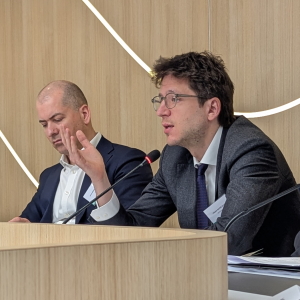
Boudinet, Crédit Mutuel AM (pictured, right): The first thing to underline is that everything is expensive on credit markets. We have seen such a huge spread tightening that this is not only a topic for CEE names against western European names, but poses a much broader question of how to approach the market. And the answer depends on what kind of funds you manage.
There has been a big growth in what we call fixed maturity funds, typically with a final maturity in 2028, 2029. Here, most of the fund managers buy bonds with a buy and watch approach and the main goal is to maximise the yield of the fund — within reason, of course. And for these funds, we think that we are still adequately compensated for being invested in CEE names — we value the diversification they provide, while the fact that you don’t really have to trade in and out of them means that if there is a spread decompression, we would not necessarily feel the pressure to sell.
For open-ended funds that do not have these types of constraints, the question is a little different. On our side, we refrain from participating in some new issues, but we tend to keep what we have on the secondary side. All the MREL bonds that came to market in 2022, 2023 have very high coupons, with very high yields at the time, so they are still good value. They’re difficult to find now, so if you sell them, you’re not sure that you can bring them back into your portfolio at a very good price. So should we in this type of fund switch to western European names? The answer really depends on the metric of the bond and the profile of the fund, but in general I would say that it’s OK to stay invested. We started from a very wide point in 2022, 2023, due to the fact that CEE banks basically had to issue bonds, no matter what, and that offered very good opportunities for us.
If there is a spread decompression, will we return to those wide levels? No, we do not think so, because the market has now been much more established, we know the issuers, we know that the investor base has been growing a lot — which has been very helpful in trading the bonds on the secondary market.
There could nevertheless be a degree of spread decompression, which would most likely be mainly driven by what is happening on the macro side, on the sovereign side, rather than on an issuer-specific level. So while we maintain a certain exposure to CEE banks, they are not as attractive as they used to be. We might not sell them, but when new issues arrive, we are asking ourselves if we are being adequately rewarded if we buy them on the primary market versus, say, a French or a German name. So we are taking a more relaxed approach and passing on some names, ready to get involved again if spreads widen. But, as I said, we tend not to sell what we hold, because we don’t know when we’ll be able to get our hands on that paper again.
We are in general in a flow-driven market in credit where most of the investors are yield buyers, and although spread decompression has been relatively minor, yields have risen quite a bit, so credit is still attractive, and because of that, I don’t see significant difficulties in CEE names remaining fairly expensive. What is not expensive for investors these days? Since everything is expensive, we tend to go back to the quality of names, and there are quite a lot of quality names in the CEE space, so for us, the levels on offer are still not insufficient.
Turning to the last part of the question, at what point might it be unjustifiable to remain in these names? Take a Polish bond, on the one hand, and a French bond, on the other, and assume for the sake of argument that the issuers are roughly comparable. With the Polish bond, I don’t know how it will trade in a sell-off environment. I know how the French bond will react, because we’ve been there, we’ve gone through a lot. So on the Polish side, I would want to be compensated at least the amount of the theoretical bid-ask spread. In that way, I am being adequately compensated in terms of spread versus the French name. This again comes back to the liquidity of bonds. We know that these bonds tend to trade well on the primary side and afterwards, but we don’t really know how they will react versus French names two or three years down the line and the liquidity that will remain on the secondary side. So the bid-ask is a good layer of protection for us, and that’s the least that we would expect to be compensated above a comparable western European name.
Hoarau, Crédit Agricole CIB: Mladen, Erste as a dealer has been very active in the region over the past years. How do you work on relative value within the region and versus, let’s say, some of the core European countries? And what can you tell us about how execution has developed, in light of the spread compression over the past 12 months and this year’s kind of stop-go market in primary?
Mladen Djurdjevic, Head of DCM Syndicate, Erste Group (pictured): Liquidity has clearly been a bit of an issue on the CEE side, but the experience with the most recent new issues during this Iran war has shown that liquidity is not so bad. With our trader, who is really active here, we are trying to provide bid and ask axes, and to keep the bid-ask gap as narrow as possible. We have seen some growth in the number of market-makers in the last couple of years, but a few more names would be helpful to add a certain degree of liquidity to the market. We recently led a senior non-preferred bond for Česká spořitelna and this was actually the most liquid bond during this crisis. It held up well, and didn’t widen that much, just in line with the widening we have seen in western Europe, and returned to more or less the same level at which it had been before the start of the war. But it’s fair to say that it really depends on the name. There are smaller issuers and also some older bonds that initially didn’t widen at all, and then all of a sudden, just because you had a selling request for a few million, their spreads widened quite a bit. So the liquidity issue is clearly there and needs to be tackled.
At the same time — and in an environment where everything is indeed expensive — you do get a decent pick-up, taking into account the ratings, which are in some cases even better than in western Europe. The Česká trade, for example, offered a pick-up versus Spanish names of 25bp, 30bp. It’s for investors to judge whether that’s sufficient, but it was a highly successful trade that a lot of accounts participated in. That was also the theme from 2025: spreads on the CEE side came down quite a lot, while oversubscription ratios were very high, and we basically did not seen any trade printing with a new issue concession, but many coming through the curve, and also then trading quite well in the secondary market. The standout example was PKO issuing its Tier 2 at 155bp and the bond very soon trading 10bp, 15bp, 20bp inside re-offer. So we’ve come quite a long way.
Going back to when MREL issuance out of CEE began, in 2022, I recall a senior non-preferred issue for Česká at 400bp where we had been quite unsure how it would work, whether or not there were going to be enough investors, and we had a book of only a billion, so it was just two times oversubscribed. And then last year, for example, mBank issued a senior non-preferred where the book was eight times oversubscribed. So we have added a lot of investors in the past couple of years.
What is quite important for western European investors to understand is that you also have a decent bid from the CEE region. Especially for the more liquid names, 20%, 25%, 30% of demand is from CEE investors — also high quality investors, with a lot of asset managers and a good amount of insurance companies buying these bonds. And that helps not only issuers on the primary side, but adds liquidity in the secondary market.
Hoarau, Crédit Agricole CIB: Jakub, following up on your earlier comments, what will determine the extent to which you choose to issue covered bonds and/or senior instruments?
Niesłuchowski, PKO Bank Polski: As I mentioned, the main trigger for us is MREL requirements, because we are already well-funded. At the same time, again, we have a local requirement, namely the long term funding ratio, covering mortgages. Our regulator actually revised it, which may limit our issuance needs to an extent, but taking into account our market share in the mortgage market, we will need more covered bonds.
From the MREL perspective, we would, of course, like to do as much senior preferred as possible, as it is the cheapest instrument. However, taking into account the subordination requirement, we have the capacity for only one senior preferred trade, around €750m, which is outstanding with the call in January 2027. So then the focus is on SNP as the next level of subordination. However, as I mentioned, Tier 2 is one of the instruments that we were active in on the Polish market in the last two years, 2024 and 2025, printing PLN3.5bn (€830m) overall. Again, the rationale is subordination requirements as defined by Moody’s, and thanks to this, we achieved in February 2025 a one-notch higher SNP rating.
Something else to note is that we have a banking tax in Poland and Tier 2 instruments are excluded from this. So if you compare senior non-preferred to Tier 2 instruments, we have a tax benefit arising from Tier 2, which on a gross basis is around 53bp. This means that, from an economic point of view, the cost of SNP and Tier 2 is comparable from an all-in perspective.
So this is how we are building our regulatory compliance plan and hence approach the instruments. And then, as I said earlier, we will look at the markets, their capacity, and how to structure taking into account the bank’s size and growth, and also additional regulatory developments on the Polish market.
Our regulator decided to introduce a countercyclical buffer, so we had to achieve one percentage point by 25 September last year, with another one percentage point by 29 September this year. This cost us around PLN3bn, which means that the capital currently allocated to MREL requirements will have to be reallocated to the buffer requirement, and in its place, we’ll be issuing MREL instruments. This means we will be active again on the MREL market — we were already planning to issue ahead of the calls of the outstanding bonds, to replace them with new ones, and with this additional need, we will come with one or two transactions. However, it will depend on balance sheet growth and also usage of other instruments, since we are also using SRT securitisation. That has gained in popularity in the Polish market over the past five years, with Polish banks having already done around two dozen SRT transactions in the last five years, not from a liquidity but from a capital perspective.
And then we would like to be active on the covered bond side with one euro transaction per year, and also on the Polish zloty market, on both the wholesale and retail sides. This is more or less a supplement to our main activity, to maintain the activity of the mortgage bank from a strategic perspective.
Hoarau, Crédit Agricole CIB: What role do ESG-labelled bonds play in your issuance strategy?
Niesłuchowski, PKO Bank Polski: We already have two outstanding SNP transactions in green format, one in senior preferred, and we were a pioneer on the Polish market with green covered bond issuance in euros. That is a very good start from our perspective.
What is behind this? Currently, the Polish economy is predominantly coal-based, and we are now embarked upon the energy transition, which is a must for us. We are therefore in Poland investing heavily in energy transformation. We are one of the major beneficiaries of RRF funds, and around 50% of this fund is devoted to energy transition projects.
From the bank’s perspective, we have clearly indicated that ESG financing is one of the pillars of our strategy, where our goal is to have a market share above 20% in new energy transition projects. Such financing needs are huge in Poland. Estimates vary, but we are talking about hundreds of billions of euros, of which a large share is expected to be financed by the banking industry.
This means that we will have sufficient fuel to be active on ESG bonds. But I would stress that the motivation is not arising from the trends that we see on the market, but first of all from the real needs of our economy and its energy transition that are providing us with the fuel in terms of assets.
Coming back to our goal of being in line with western European names when it comes to name recognition and investor diversification, we see that with green bonds we are able to reach an even broader investor base, and that is a very important factor for us. If we can do something that leads to a better investor perception, we’ll do it. But, again, it is not the marketing angle, but the green transition in Poland that is driving our activity.
Hoarau, Crédit Agricole CIB: Łukasz, since 2022 activity in the region has grown significantly. As a counsel for this new range of issuers tapping the market in various formats, what has your experience been?
Łukasz Walczyna, Counsel, A&O Shearman (pictured): Indeed, the time since the MREL explosion in Poland in 2022 has been a very exciting period for lawyers, too.

The key takeaways for me are, first of all, that the issuers that decided to enter the international capital markets, will, in my view, remain in the international capital markets. They see the benefits of setting up a Eurobond programme. They see the benefits of having a very high level of disclosure. They see the benefits of cooperation with reputable international investment banks and engaging with the international investor base. As Jakub mentioned, the Polish market will probably remain an important source of funding for Polish financial institutions, but the capacity of the Polish market is limited. From my perspective, the Polish market and Polish investors are more susceptible to shocks. For example, if there is a negative market event, the market closes faster than the international market, and it takes longer to reopen. This is for historical reasons, certain scandals that affected the Polish market in the past years, and also a large part of the Polish investor base is still retail investors that are more conservative and try to preserve cash when they see an adverse event.
My experience has also been that all the Polish issuers with whom I have worked on international issuances, they take great care that the set-up they prepare for the international investors is up to the highest international standard. They engage reputable counsel, reputable investment banks, and I really see great engagement from the issuer teams in preparing the disclosure and setting up the whole issuance process.
Another observation that I believe also points to Polish and CEE issuers staying in the international space, is that some of my clients started using the pricing they get on the international market as a bargaining chip in discussions with Polish local investors. I had a client who had received pricing he perceived as very negative from his Polish investor base, and he simply told them that, look, my notes are listed on an international stock exchange, which is much more liquid than the Polish stock exchange, and the pricing I get from the international investors is much more attractive, so you really have to rethink your approach to engaging with me.
So this is really an exciting journey. Of course, there are still some hiccups. There are some legacy regulatory issues. But fortunately we are past the largest hurdles. The Polish regulator tends to be more conservative than, say, western European regulators. But it is fortunate that it has started to engage more with reputable financial institutions and is more open to discussing issuance plans, particularly of new instruments that were not previously issued out of Poland, which also makes the job easier for everyone.
Hoarau, Crédit Agricole CIB: What are the key considerations on the resolution framework side?
Walczyna, A&O Shearman: The resolution framework is fully aligned with European legislation. And it’s actually been tested in Poland, in the case of two commercial banks, which has shown us that the process works. I hope it won’t happen too often, but we see that the resolution framework works and leads to the conclusion that was desired by the legislator. There were attempts to challenge the decisions of the Polish resolution authority in the courts, but these have so far been unsuccessful — although the courts commented on the resolution process, making some technical comments about how it should be structured, the courts did not challenge the essence of the process.
The main takeaway, and what we saw from the resolution processes that have been completed so far, is that the resolution authority will try to protect individual investors — not only deposit-holders, but also retail holders of debt securities issued by the bank. To the greatest extent possible, they will try not to touch the retail investor base, meaning that institutional investors will have to take the burden of the resolution process. But the way the resolution authority approached this, it’s an extremely transparent process. It is supported by valuations and advice from reputable third parties. Also, in the decision of the resolution authority, they are very clear as to the division of assets, which assets are subject to write down, which assets will survive. So while it’s not good that a bank goes into a resolution, the experience in Poland and the fact that the resolution framework was tested and passed this test, is a positive outcome.
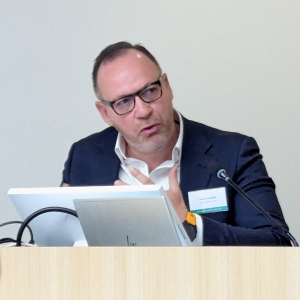
Hoarau, Crédit Agricole CIB (pictured): Jérémie, as an investor, what is your view when it comes to resolution frameworks?
Boudinet, Crédit Mutuel AM: I agree with what Łukasz said regarding Polish banks: the fact that a resolution framework has been tested is a good sign. But I would qualify that by asking, are we really sure that just because it has been tested, it would happen in the same way again? Bank resolutions are first and foremost political decisions aimed at ensuring financial stability, but they are politically-driven, so you are never sure if, as a bondholder, you will be treated the same way — it will depend on what the government thinks. What are the reputational implications for the local banking sector? Could there be some contagion or not? Is it a locally systemic bank that is being put into resolution, or a smaller one? Because, to be honest, we do not even really know how it would happen in some western European countries. In France, you know how you’re supposed to put a bank into resolution, but are we really sure that the French government will be ready to bail-in the senior non-preferred bonds of a bank like Crédit Agricole? Again, this is a political matter, much more than a financial one. So it’s difficult to assess the robustness of resolution frameworks everywhere. Some investors were sure that in Switzerland they could not lose out, yet look at what happened with Credit Suisse. They had to change the law. So to us, it does not really matter whether resolution frameworks have been tested or not, because basically, if you hold subordinated debt, you should assume that you will have absolutely no recovery. If you assume some recovery, that’s just a bet, but you have no proof that you would have any.
On the senior side, I would say, are you sure that it is only being sold to institutional buyers, or not? As Łukasz said, the investor base for the bonds is very important. If Tier 2 bonds are being sold directly or indirectly to retail, that’s good protection. In certain countries, even some Tier 1 bonds are being bought by pension funds, so again, you can ask if they would really bail these in fully, or to what extent. It’s difficult to assess. So the investor base is more important than whether or not the resolution framework has been tested, because in the end, you never know how this will be dealt with. Will you get a big bail-in? Or to what extent? Will you be saved by other banks? There are lots of ways to circumvent local laws, because some governments can be very good at meddling in their local institutions. They can favour locally-owned banks versus foreign-owned banks.
So what can you be sure about? You know the thickness of the capital layers, so these are a good way of seeing how much protection you have in terms of subordination risk, and then the investor base. These are your two main guides, much more than previous cases and how they were handled.
Hoarau, Crédit Agricole CIB: Going back to the potential for CEE banks and their issuance, within an institution like Crédit Mutuel Asset Management, what are the practical constraints on growing that allocation further, whether we’re talking internal limits, index eligibility, liquidity thresholds or ESG screening. What needs to be worked on to increase their potential?
Boudinet, Crédit Mutuel AM: Firstly, financial and extra-financial transparency. On the ESG side, it is very important that issuers provide a lot of information, because even though the ESG-labelled funds are not big sellers right now, the fact remains that we have to screen each and every bond and issuer based on ESG criteria — first and foremost, on governance criteria, but not only. So if you do not divulge information, I’m sorry, but I cannot invest in you. It’s not only an issue for ESG-labelled bonds — we need basic information because the way ESG works is that you have to spit out an ESG score for each and every issuer in your universe. And there is a difference between listed and unlisted issuers when it comes to the amount of information and speed with which we can access this, so if you are not listed, it can be trickier.
Secondly, liquidity. If on the primary side you offer some new issue premium, that helps us participate, and we can allocate a little bit more to you. Beyond that, the extent to which we can buy you will depend on how present you are in the market. Do you have a curve? How easy it is to price a new bond? Is it the first time that you are issuing a benchmark or not? If you have several benchmarks, we can really assess where the bonds should trade. If you only have one bond outstanding in euros, with a size of €200m, I’m sorry, but I don’t know how liquid it is, so I don’t know how good the pricing is. Who holds the bond? I have no idea. I cannot get my hands on it. So what is the real price? What is the real yield? I’m not that sure.
And then it’s a question of the size of a bank’s balance sheet and how much they can issue, how present they can be in the euro-denominated market. If you intend to issue just once in the euro-denominated market, you’re going to have to put up a strong new issue premium, otherwise it’s going to be difficult for me to argue in your favour, because I know that if that’s a one-and-done issuance, liquidity will be very poor, especially a few months after the issuance. I would acknowledge that, clearly, this is something that is a factor of the bank’s overall development and size, and not something that can be simply changed for the sake of improving its issuance profile.
Right now, CEE bank bonds only represent 1.8% of the Bloomberg EuroAgg Financials index that we use, which is a very small proportion — and that’s only for European financials. It will increase, of course, and I would underline that the more bonds that come into the euro space, the better it is for everyone. Once some banks from a country have paved the way, it’s easier to allocate to second tier names if you are comfortable with big ones. To put it in another way: more and more investors are familiar with PKO, and after they have started by analysing PKO because they have a recurring presence, they are inclined to invest a bit more in other Polish names coming to the market, because they know that they will not be the only ones analysing this issuer and this bond. So the more issuers come to the market, the more regularly they come, the more familiar we get, so the more we can allocate without having to justify to our clients or compliance teams that we are investing in a very risky and peculiar proposition.
Szymon Wypiorczyk, FIG DCM Origination, Crédit Agricole CIB: What are the main considerations regarding potential supply of AT1 and Tier 2 in euros, in particular any constraints?
Walczyna, A&O Shearman: It’s mostly the capacity of the local investor base to absorb the issuances of those instruments, especially in terms of AT1. Polish banks have so far issued three series of AT1 instruments: two of them were widely marketed, one of them was an intra-group instrument, and only one was marketed to an international investor base. As long there is sufficient demand in the Polish zloty market, my view would be that the issuers would rather go to the local market, not only because of the costs of the issuance, like the swap Jakub mentioned, but also because disclosure requirements imposed on Polish issuers in the Polish debt capital market are very light, so you can execute a transaction very swiftly and with very short documentation.
Niesłuchowski, PKO Bank Polski: If you look at the relatively well capitalised Polish banking sector, there is currently simply no need for much more AT1. This also reflects the fact that the Polish FSA has historically been rather conservative on the capital distribution side, so banks simply built up a pretty significant capital stack. For example, there is a cap for 2025 profit distribution of up to 75% as a maximum. You can ask the Polish FSA for permission to go beyond that, but it’s not guaranteed that you will get. In this context, we are as a sector therefore in a pretty comfortable situation, and that’s why you will not see many AT1 transactions overall — let alone euro AT1 issuance.
With Tier 2 transactions, the market is not so active, although we have already seen a euro transaction from Pekao, the second largest bank in Poland. On our side, we chose the Polish market for Tier 2. We also plan to issue a Tier 2 transaction this year, but that would be of sub-benchmark size based on our needs, so our first choice is Polish zloty as the go-to market. This decision also takes into account operational factors — for example, we do not need a rating for Tier 2 transactions, Polish investors simply base their investment on our name and our position in the market. This is rather convenient for us, as any discussion around credit and other metrics that would be appropriate for a Tier 2 transaction is much simpler than it would be with investors in a euro issue. However, we are often asked about whether we will come with a Tier 2 transaction in euros and we do not exclude that we will one day do so. We can also do dollars because we are currency-agnostic, with everything being swapped to Polish zloty anyway. Overall, our approach is simple: disciplined, diversified and aligned with long term balance sheet strength.